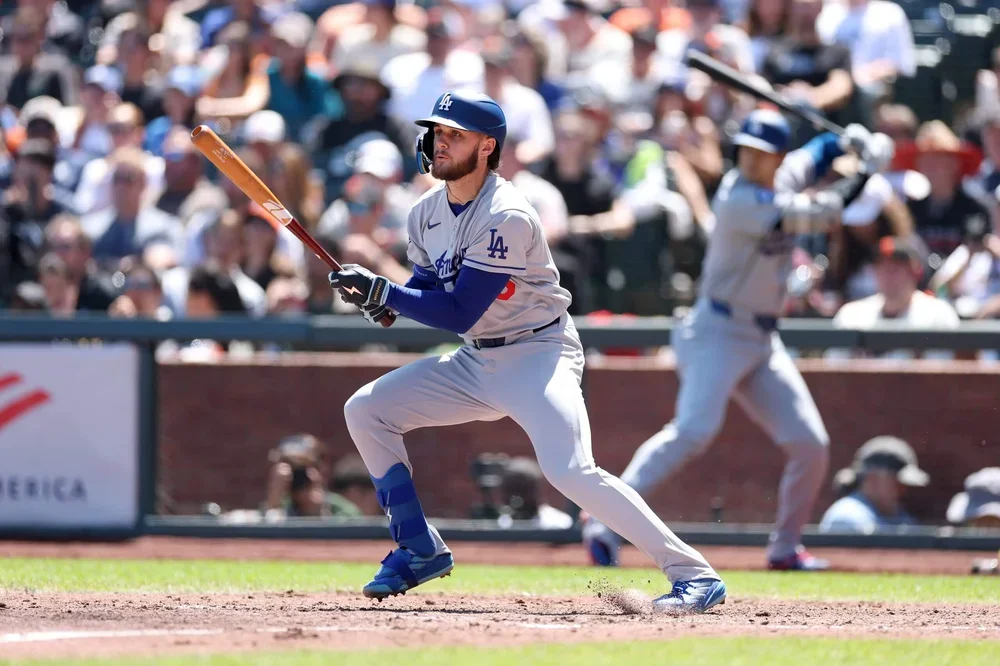

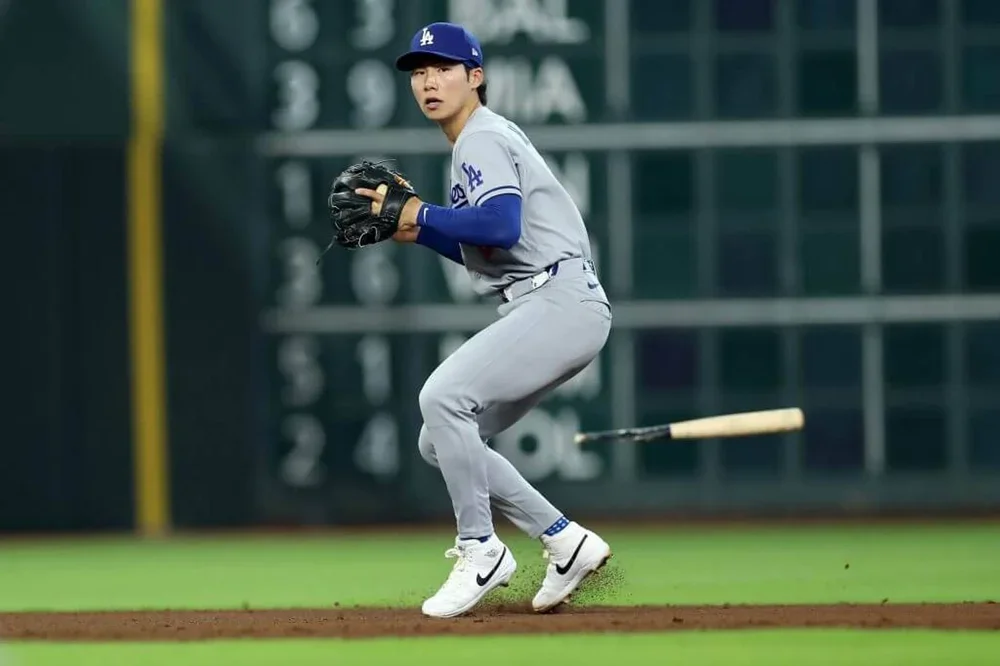
Hyeseong Kim has impressed the Dodgers since his promotion from Triple A, displaying a refined approach at the plate that has yielded positive results.
LOS ANGELES — Andrew Friedman, the Dodgers president of baseball operations, is known for his favorite phrases when addressing roster decisions. One of his go-to lines is his tendency to “kick the can down the road” when major choices loom.
That doesn’t mean Friedman procrastinates. The experienced executive knows that roster crunches often resolve themselves. However, with Mookie Betts set to rejoin the Dodgers lineup on Monday for a four-game home series against the San Francisco Giants, that can can no longer be kicked. The team faces its first tough roster decision, with no perfect solution in sight.
“We’ve got a tough decision,” manager Dave Roberts said following the Dodgers’ 7-2 loss to the Atlanta Braves on Sunday. “All of the options for the corresponding move, these guys have done a great job and served a very good purpose for our club. It’s a good problem to have, considering where we are. But it’s a (tough) conversation.”
When Betts went on the 10-day injured list on April 5 with an oblique strain, the Dodgers opted to rotate their middle infield but named Alex Freeland the starting second baseman. The platoon mostly applied to shortstop, where Hyeseong Kim and Miguel Rojas shared time, leaving Santiago Espinal as a utility option off the bench. The reasoning was similar to why Freeland made the Opening Day roster over Kim: with Tommy Edman and Kiké Hernández also on the IL, the Dodgers saw a rare chance to give Freeland everyday at-bats and evaluate his potential.
Now, the Dodgers must decide between optioning Kim or Freeland, or designating Espinal for assignment. Many factors come into play. Given the unpredictable nature of oblique injuries, Betts is not expected to play every day during at least his first week back. Roberts plans to start Betts on Monday and Tuesday, with a scheduled off day Wednesday before a game Thursday. If the Dodgers believe there is enough playing time for both Freeland and Kim, it could buy each player a few more days on the active roster.
But Betts’ staggered playing time will only last so long, and the team wants to avoid having both Kim and Freeland on the bench. The club must also consider what is most valuable in the long term, which often means everyday playing time, even if that comes in the minor leagues.
“You’re circling around it regarding who will get the lion’s share (of time), how much Mookie will play, the value of someone going to the minors to play more versus having some roster flexibility,” Roberts said. “There are many different ways to approach it. We’re in the process of having those conversations now.”
The Dodgers also value the role of a true 26th man on their roster—a player who doesn’t need consistent reps and can be plugged in when necessary. That’s why they signed Espinal to a one-year, $2.5 million deal in spring training, essentially as depth until Edman or Hernández returns. According to multiple league sources, the deal included an advanced consent clause, allowing the team to release the player within the first 45 days of the contract without paying the remainder of his salary. Those sources noted that the deal was restructured, and the deadline has since passed.